TDC - Technical Direction Company delivered projection and LED technology for 11 installations at Vivid Sydney 2026, including its own AI-powered interactive artwork, The Daydream Machine.
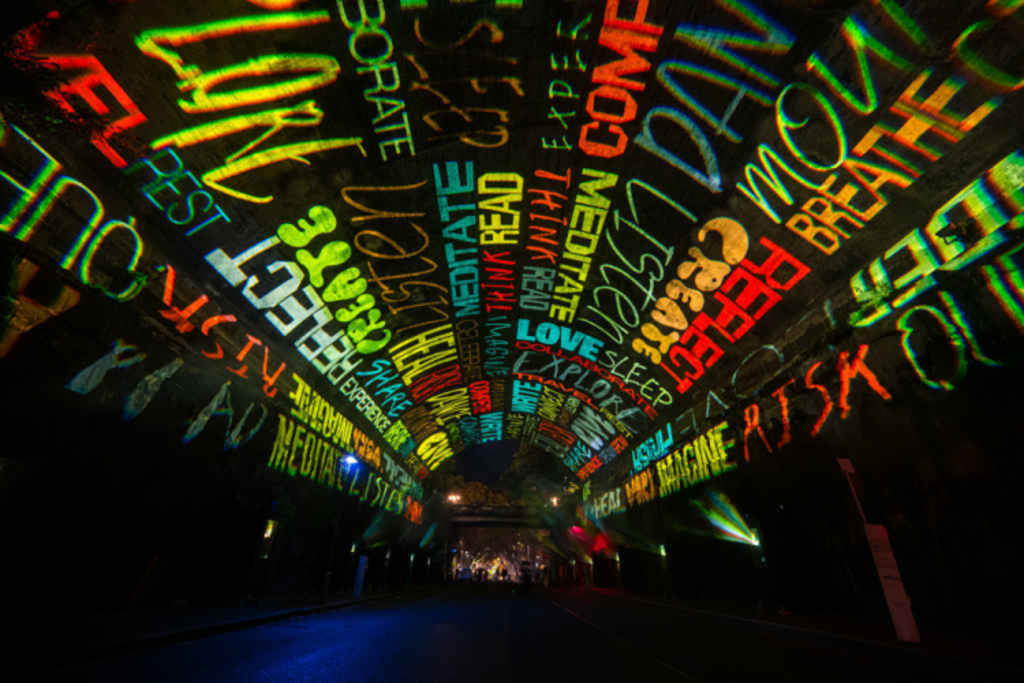
Created by creative technologist Harrison Dow, Alex Rendell and Drew Ferors, The Daydream Machine transformed Darling Harbour’s Pier Street Underpass into a responsive digital artwork that changed as visitors moved through the space.
The installation used AI systems and live rendering to react to audience movement, creating an experience that evolved in real time.
Harrison Dow said: “Using AI systems and live rendering, the installation reacts and evolves with every person who walks through it, creating an experience that is constantly changing and never behaves the same way twice.”

TDC has supported Vivid Sydney for more than 15 years, delivering large-scale projection and technology systems for artworks across the city. In 2026, its technology was used across Circular Quay, The Rocks, Barangaroo and Darling Harbour.
Projects supported by TDC included Lighting of the Sails: Opera Mundi by Yann Nguema on the Sydney Opera House; Vaiola by Angela Tiatia and Spinifex Group at the Museum of Contemporary Art; Fringe of Infinity by Javier Riera at Customs House; Time: Warped at the Argyle Cut with ER Productions; and Deep Time by Hotaru Visual Guerrilla at Garrison Church.
Other installations included Circles of Rhythm at ASN Clocktower, Afterimage: A Projection Mapped Mural at Tumbalong Park, As Water Falls by Studio Irregular at Circular Quay, and Laniakea by David Morton at Barangaroo House.
TDC’s central master control system provided real-time oversight of installations across the city, supporting nightly operation throughout the festival.
Ahead of the event, TDC also used LiDAR scanning to create digital replicas of Garrison Church and the Argyle Cut. These models allowed artists to design, test and refine projection works against accurate versions of the buildings before arriving on site.
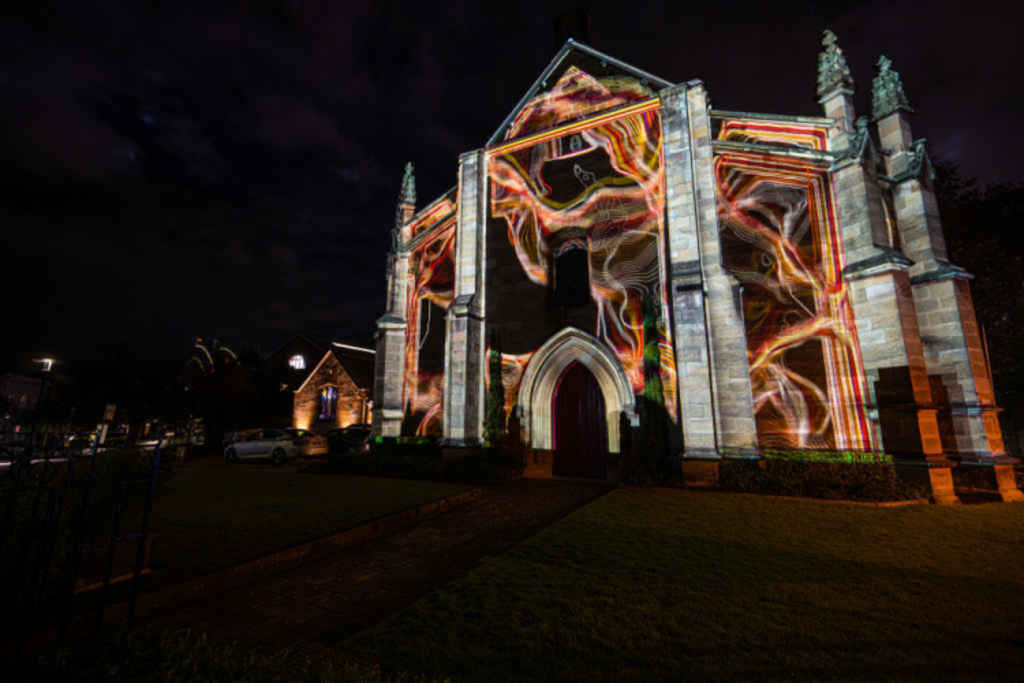
Drew Ferors, head of innovation and training at TDC, said: “The process helps artists better understand scale, surfaces, proportions and architectural details while significantly reducing development time and increasing projection accuracy.”
The deployment included Barco laser projectors across nine projection-mapped sites, ROE LED tiles for interactive experiences, 13 live monitoring cameras and 11 automation systems.
TDC said the festival involved 547 million projected pixels illuminating Sydney landmarks each night, more than 1.45 million ANSI lumens of projection brightness and 23 consecutive nights of operation.
Alex Rendell, creative technologist and technical project manager at TDC, said: “Our role is bringing all those creative and technical systems together, from advanced Projection and LED systems through to media servers, TDC Live View monitoring and interactive technologies, so the artwork can come seamlessly to life for everyone’s enjoyment.”
Vivid Sydney 2026 ran from May 22 to June 13.